Hello Lovelies!
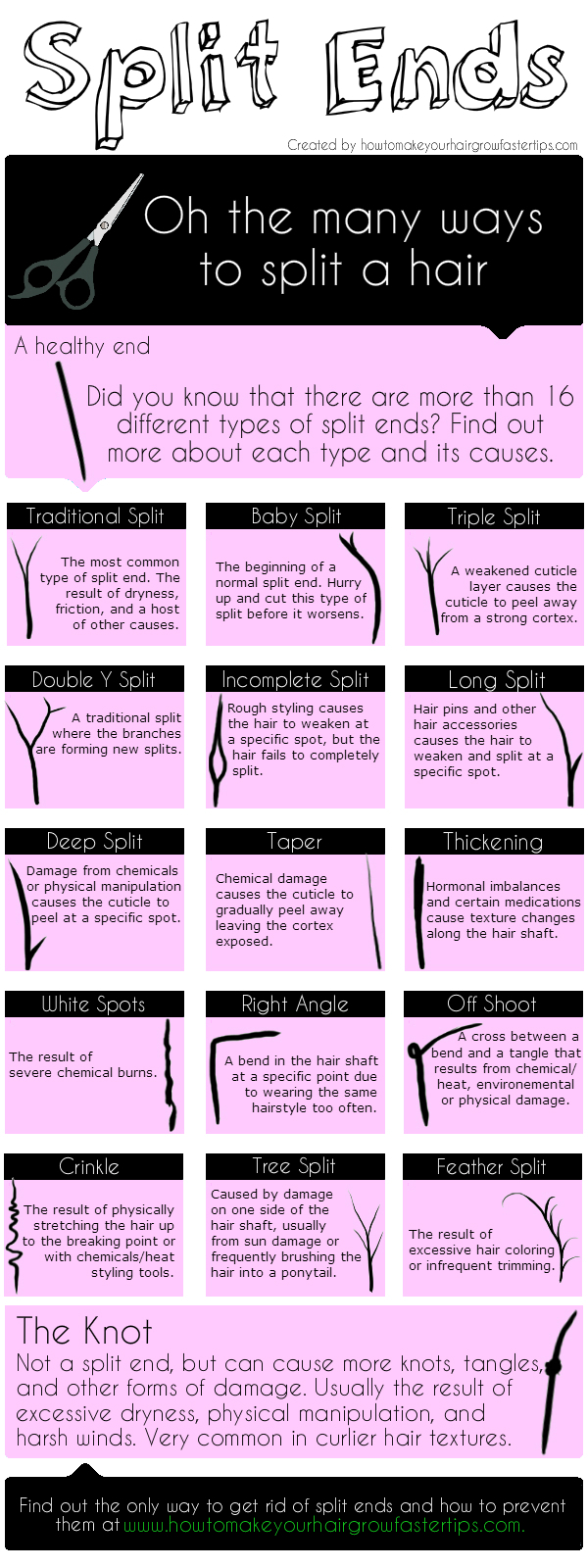
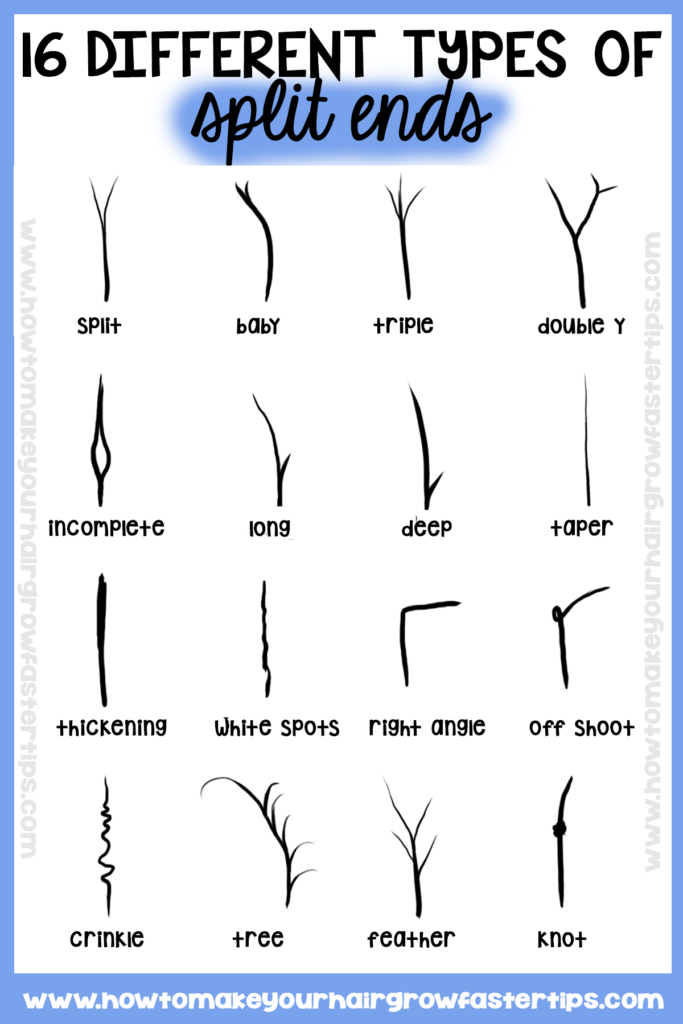
Split ends have stagnated many a long hair goals! Most women have them, have had them, or will have time at some point. Most of us know how annoying those little buggers can be, but who knew there were so many different types? I put together this infographic to illustrate just how many types of split ends there are and their causes. I hope you enjoy, and if you really love it, please share it with your friends! Oh, and don’t forget to check out this post to find out how to prevent split ends.
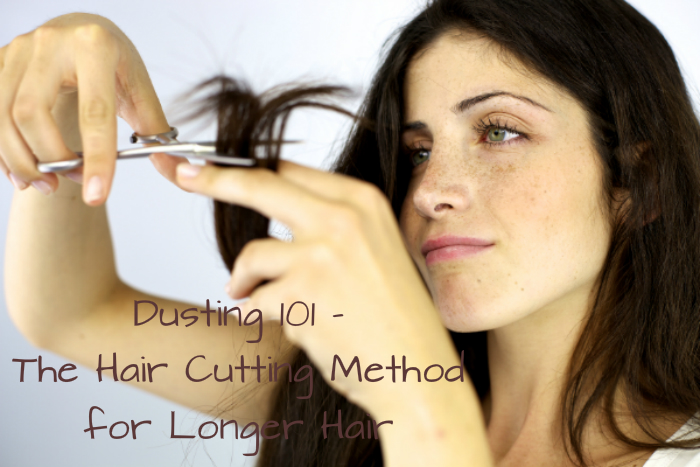
 Dusting may not be for everyone. Some people find dusting tedious and argue that their hair does just fine with the regular ole trim every 6 to 8 weeks method, and if that’s the case for you, well then more power to you. However, there are certain hair types that I just cannot see growing long without regular dusting, and that’s fine hair types. Because the structure of fine hair is vastly different than coarser hair textures, fine hair splits and breaks faster than any other hair type. So if you have fine strands, you need to dust even more than ladies with thicker, coarser hair strands.
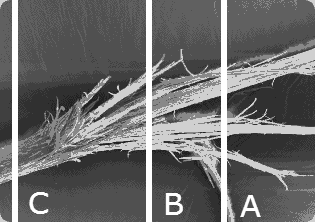 Now if you haven’t let scissors touch your locks in a while (6 months or more), chances are your ends are worn and you need to start with a trim or haircut, not dusting. Dusting hair that hasn’t been cut or trimmed in a while won’t help much because you’ll only be trimming below the point of damage, and some damage will be left behind. For example, in the image to the left of a split end under a microscope, dusting at point A or B would leave some damaged ends behind, so there is no point in dusting at all in this case when your ends would still have some damage. To remedy all of the damage on the ends of the hair in the photo on the left, you’d have to cut the hair at point C where the hair strand is still whole and not split. Then after a fresh haircut or trim, you can incorporate dusting into your hair care regimen to keep damaged and